Alexithymia in Relationships: Using Test Results to Improve Communication
Has your partner ever asked, "What are you feeling right now?" only for your mind to go completely blank? This kind of emotional disconnect can be confusing and frustrating for both people in a relationship. People with alexithymia traits often struggle to identify and express their emotions. This creates invisible barriers that can hinder intimacy in relationships.
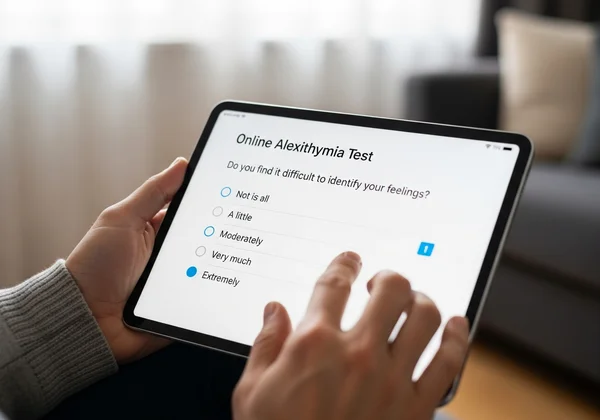
But what if you could turn this confusion into clarity? This article explores how understanding alexithymia can transform your relationship. We'll discuss how the results from an assessment can provide a roadmap for better communication, deeper understanding, and a stronger emotional bond. By exploring common challenges and practical strategies, you can start building a bridge to your partner. A great first step is to gain a baseline understanding with a confidential alexithymia test.
Understanding Alexithymia's Impact on Romantic Relationships
Alexithymia is not a lack of feeling; it's a difficulty in processing and articulating those feelings. In a romantic relationship, which often thrives on emotional exchange, this can create significant hurdles. The partner with alexithymia often feels misunderstood or pressured. Meanwhile, their partner may feel unloved, ignored, or emotionally isolated.
This dynamic isn't about a lack of love or care. It's about a difference in emotional language. Understanding this is the first step toward compassion and finding new ways to connect. It moves the conversation from "You don't care" to "How can we understand each other better?"
Emotional Processing Differences
When alexithymia affects your relationship, it's like trying to connect through a thick fog—both partners sense something important is happening, but the details remain unclear. For the person with these traits, internal states like anxiety or excitement might register only as a vague physical sensation, like a racing heart or tense muscles. They aren't withholding emotions; they genuinely struggle to translate those physical signals into emotional words like "I'm nervous" or "I'm happy."
Communication Patterns in Relationships
This difference in processing naturally leads to specific communication patterns. The non-alexithymic partner may rely on emotional language to connect, while the partner with alexithymia may communicate through actions, problem-solving, or sharing facts. This isn't a sign of a failing relationship but a symptom of a communication gap that can be bridged with awareness and new tools.
How an Alexithymia Test Can Reveal Relationship Patterns
An emotional awareness assessment is not a diagnosis but a tool for self-discovery. It acts like a mirror, reflecting your unique patterns of emotional awareness and expression. At AlexithymiaTest.com, our tool is based on established psychological concepts to give you a reliable starting point for this exploration. The results can help you move from vague feelings of "something is wrong" to specific, actionable insights.

Interpreting Your Score
After completing an online alexithymia test, you will receive a score. A higher score generally suggests stronger traits. But what does this number mean for your relationship?
- A High Score: This might validate your long-held feelings of being different in how you process emotions. It can explain why you find it hard to "open up" or why you focus on the practical side of problems. For your relationship, this score is a signal to start building a new communication toolkit that doesn't rely solely on verbalizing feelings.
- A Mid-Range Score: This could indicate you have some traits that appear under stress or in certain situations. Perhaps you can discuss some emotions but struggle with more complex or negative ones. This insight allows you and your partner to identify specific trigger points where communication breaks down.
- A Low Score: This suggests these traits are likely not a significant factor. The relationship challenges may stem from other communication differences, attachment styles, or external stressors. This is also valuable information, helping you focus your efforts elsewhere.
Identifying Communication Breakdowns
The true power of a test comes from using the insights to pinpoint exact communication issues. For example, the detailed AI report from our test can offer personalized observations. It might highlight a difficulty in distinguishing between different feelings, like confusing anxiety with excitement.
In a relationship, this single insight is huge. Your partner might interpret your silence before a big event as disinterest, when it's actually overwhelming anxiety you can't name. Sharing this insight can instantly replace misunderstanding with empathy. It helps you both see that the problem isn't a lack of care, but a translation issue between your inner world and your outward expression. With these insights, you can begin a more informed conversation.
Practical Communication Strategies Based on Test Results
Understanding your emotional patterns is valuable, but real transformation happens when you put new communication strategies into practice. Once you understand how alexithymia affects you, you can adopt specific strategies to improve communication. These techniques work by creating new pathways for connection that don't depend on a traditional "feelings talk."
For High Alexithymia Traits: Building a New Language
If your test results indicate strong traits, your goal is to slowly and patiently build a bridge between your physical sensations and emotional concepts.
- Use an "Emotions Wheel": This is a visual tool that shows basic emotions (like sad, happy, angry) and connects them to more nuanced feelings (like disappointed, content, frustrated). When your partner asks how you feel, you can look at the wheel and find a word that seems to fit.
- Focus on Body Sensations: Instead of trying to name an emotion, start by describing what you feel physically. "My chest feels tight," or "My stomach is in knots." This is valid, concrete information your partner can understand and empathize with.
- Practice "I statements": Frame your thoughts from your perspective. For example, instead of "You're making me stressed," try "When the schedule changes suddenly, I feel overwhelmed." This is less accusatory and more descriptive.
For Partners: How to Understand and Respond
If your partner has alexithymia traits, your support can make a world of difference. Your role is to become a patient and curious translator.
- Ask Different Questions: Instead of "How do you feel?" try asking about thoughts or physical sensations. "What are you thinking about that?" or "Where do you feel that in your body?"
- Validate Actions as Love: Actively recognize and appreciate their non-verbal or practical expressions of love. Say, "Thank you for fixing the sink. I know that's one of the ways you show you care about our home."
- Offer Emotional Guesses Gently: You can try to label an emotion for them, but do it as a question, not a statement. For example, "You seem quiet. Are you feeling worried about the presentation tomorrow?" This gives them a chance to agree, disagree, or reflect without pressure.
Sharing Your Test Results with Your Partner
Sharing your test results can be both vulnerable and transformative. It invites your partner to see your inner world more clearly and work with you as a team. This conversation can mark a new chapter in your relationship, one built on shared understanding.

When and How to Discuss Your Results
Timing and approach are everything. Choose a calm, neutral time when you are both relaxed and won't be interrupted. Avoid bringing it up during an argument or when one of you is stressed.
Frame the conversation positively. Start by saying something like, "I've been doing some thinking about how we communicate, and I found something that I think could really help us. I took this online assessment, and the results were so insightful." Emphasize that your goal is to strengthen your connection. If you've opted for the AI Personalized Report, you can share specific, constructive insights from it.
Translating Test Scores into Relationship Insights
A number on its own isn't very helpful. The key is to translate that score into what it means for your relationship. Don't just say, "I got a high score on an alexithymia test."
Instead, connect it to shared experiences. You could say:
- "You know how I get quiet when you're upset? The test suggests it's because I have trouble identifying my own emotions, not because I don't care."
- "The report mentioned a tendency to focus on external events. That explains why I always try to 'fix' your problems instead of just listening. I'm going to work on that."
This approach turns a personal discovery into a shared solution. It shows you've reflected on your behavior and are committed to growth. To get these kinds of personalized insights, you can get your AI report after the initial test.
Your Next Steps Toward Emotional Connection
When alexithymia is present in a relationship, certain patterns often emerge. These are not signs of a failing relationship, but rather symptoms of a communication gap that needs to be addressed. If these points resonate with you, it doesn't mean your relationship is doomed. It simply means you may benefit from a new perspective. Gaining clarity on your emotional processing style can be a powerful turning point. You can start your test today to explore these traits.
Learning about your alexithymia traits isn't about identifying a defect—it's about uncovering the unique operating manual for your emotional world. By identifying communication patterns, building a new emotional vocabulary, and approaching each other with curiosity instead of judgment, you can build a stronger, more resilient bond. The journey starts with a single step: self-awareness.
Are you ready to understand your emotional world and improve your relationships? Take our free, confidential alexithymia test and unlock the insights that can help you connect more deeply with yourself and the one you love.

The Takeaway
Can dating someone with alexithymia work?
Yes, absolutely. A relationship with someone who has alexithymia can be just as loving and successful as any other. The key is for both partners to understand the trait and commit to finding alternative communication strategies. Patience, empathy, and a focus on non-verbal and action-based expressions of love are vital.
How do you express love when you have alexithymia?
Many people with these traits express love through actions rather than words. This is often called "instrumental" love and includes acts of service, providing for their partner, solving problems, or spending quality time together. Learning to connect these actions with loving intent and occasionally verbalizing it—even a simple "I'm here for you"—can be very powerful.
Is emotional disconnect in relationships always due to alexithymia?
No, not at all. Emotional disconnect can stem from many sources, including different attachment styles, unresolved conflicts, external stress, depression, or simply growing apart. Alexithymia is just one possible piece of the puzzle. If you're concerned about your relationship, taking an online alexithymia test can be a helpful step to rule it in or out, but professional couples counseling is often the best way to explore the full picture.