Alexithymia Test Results: How CBT Therapy Uses OAQG-2 Data for Emotional Growth
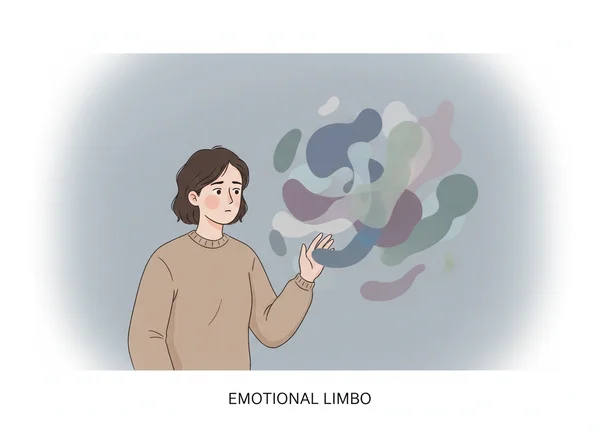
Have you ever sat in a therapy session and felt completely stuck when your therapist asked, "How does that make you feel?" For many people, this isn't just a moment of shyness. It is a fundamental disconnect from their internal emotional world. If you find it hard to identify or describe your feelings, you might be experiencing alexithymia. This trait can make traditional "talk therapy" feel frustrating or even impossible.
How can you make therapy work when you can't find the words for your emotions? The answer lies in using objective data to guide your treatment. By taking a professional assessment, you can turn a vague sense of confusion into a clear roadmap for recovery. Cognitive Behavioral Therapy (CBT) is highly effective for alexithymia, but it works best when it is tailored to your specific profile.
Before diving into deep therapeutic work, it is helpful to take the OAQG-2 alexithymia assessment to see where you stand. Understanding your unique emotional processing style is the first step toward a richer, more connected life. This article will explore how test results from the OAQG-2 assessment can transform your experience with CBT.
Understanding Alexithymia Through the OAQG-2 Assessment
Alexithymia is not a mental illness. Instead, it is a personality trait characterized by difficulties in emotional awareness. To address these difficulties in therapy, clinicians and researchers often use the OAQG-2 assessment. This scientific tool breaks down the complex experience of alexithymia into measurable parts. Without a clear measurement, therapy can feel like wandering in the dark.
The Three Dimensions of Alexithymia Measured by the Test
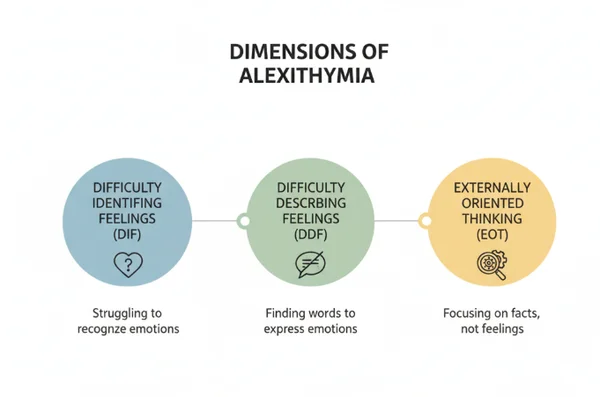
The OAQG-2 identifies three key challenges in alexithymia. Knowing which ones impact you most helps tailor your therapy journey.
- Difficulty Identifying Feelings (DIF): This involves a struggle to distinguish between emotions and the physical sensations of emotional arousal. For example, you might feel your heart racing and think you are having a heart attack when you are actually feeling anxious.
- Difficulty Describing Feelings (DDF): Even if you know you are upset, you might lack the words to explain it to others. This often leads to the "I don't know" response that can frustrate partners and therapists alike.
- Externally Oriented Thinking (EOT): This is a tendency to focus on external events rather than internal experiences. People with high EOT scores prefer to talk about what happened during their day rather than how they felt about those events.
By taking a validated alexithymia test, you can identify which of these three dimensions is most prominent in your life.
How Your Test Score Creates a Personalized Therapy Map
A simple "high" or "low" score isn't enough to guide therapy. The real value comes from seeing the balance between the three dimensions. This creates a personalized therapy map that you and your therapist can use to set goals.
For instance, if your results show high DIF but low EOT, your therapy should focus on "interoceptive awareness"—learning to listen to your body. However, if you have high EOT, you might need to work on "psychological mindedness" first. This means learning why internal feelings matter in the first place. When you examine your specific scoring patterns, you move from a general feeling of being "different" to having a specific plan for improvement.
CBT Strategies Tailored to Your Alexithymia Profile
Cognitive Behavioral Therapy (CBT) is a gold-standard treatment because it is structured and goal-oriented. Unlike some therapies that require you to "dive deep" into emotions immediately, CBT provides emotional identification exercises that build your skills step-by-step.
Building Emotional Vocabulary for DDF Challenges
If your test results highlight Difficulty Describing Feelings (DDF), the primary goal of CBT will be expanding your emotional vocabulary. Many people with alexithymia only use "big" words like happy, sad, or angry.
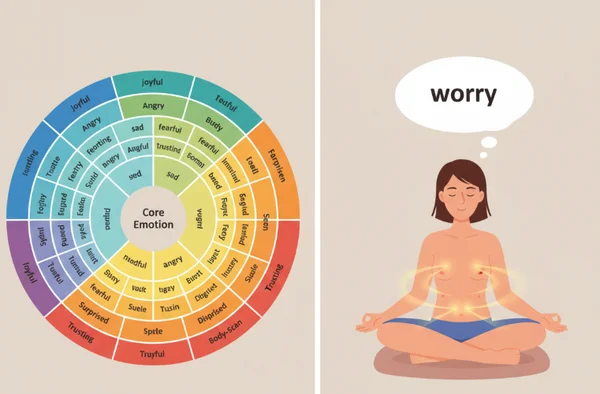
In a CBT setting, you might work with an "Emotion Wheel" or a "Feeling Word List." Your therapist will help you find more nuanced words. Instead of just saying you are "bad," you might learn to identify that you feel overwhelmed, dismissed, or lonely. This practice bridges the gap between your internal state and your social interactions.
Mindfulness Techniques for DIF Difficulties
For those struggling with Difficulty Identifying Feelings (DIF), the body is the best teacher. CBT often incorporates mindfulness and "body scanning" to help you connect physical sensations to emotional labels.
A therapist might guide you through an exercise where you notice a tightness in your chest. Instead of ignoring it, you sit with the sensation and ask, "If this sensation had a name, what would it be?" Over time, you learn that a tight chest might mean "worry," while a warm feeling in the face might mean "embarrassment." You can explore your emotional identification skills with our test to get a baseline of your current identification skills.
Structured Thinking Exercises for EOT Patterns
Externally Oriented Thinking (EOT) can be the hardest dimension to tackle because the person often doesn't see the value in focusing on feelings. CBT addresses this through structured logic.
Exercises might include "Emotional Record Keeping," where you write down an event, your thoughts, and the resulting physical feeling. This creates a logical link between external facts and internal states. By treating emotional awareness as a "skill to be mastered" rather than a "mystery to be solved," CBT helps those with EOT patterns engage more deeply with their inner lives.
Collaborating with Your Therapist Using Test Results
One of the biggest hurdles in mental health care is the "communication gap." You know something is wrong, but you can't explain it. Your therapist wants to help, but they might misinterpret your lack of emotional expression as resistance or boredom.
How to Present Your Test Results to Your Therapist
Bringing your alexithymia test results to a session is a game-changer. It provides an objective third-party perspective that validates your experience. You might say:
- "I took an assessment based on the OAQG-2, and it showed I have high scores in Difficulty Describing Feelings."
- "This report explains why I struggle to answer your questions about my emotions."
- "Can we use these results to focus our CBT sessions on building my emotional vocabulary?"
This approach shifts the focus from your perceived "failure" to communicate to a shared "problem-solving" mission. If you choose an AI Personalized Report, you will have even more specific insights and action plans to share with your professional.
Measuring Progress: Revisiting Your Assessment
Therapy is a journey, and like any journey, you need to check the map periodically. Alexithymia is not a fixed state; it is a trait that can be managed and improved.
Retake the test periodically to track progress. Notice lower DIF scores? Your emotional vocabulary growing? These wins show CBT is working. Seeing a lower score on a follow-up test can be incredibly motivating. It proves that your hard work in therapy is paying off. To track your journey, you can start your initial assessment today and save your initial score as a baseline.
Your Personalized Path to Emotional Awareness
Living with alexithymia can feel like living in a world where everyone else is speaking a secret language of "feelings" that you don't understand. However, you don't have to remain a stranger to your own heart. By combining the structure of CBT with the objective insights of the OAQG-2 assessment, you can build the skills necessary for emotional connection.
Imagine finally understanding why emotions feel like a foreign language—our test gives you the translator you’ve been missing. Use our reliable, science-based tool to uncover your emotional patterns. Take the test now and consider the AI Personalized Report for a deep dive into your results.
Frequently Asked Questions About CBT and Alexithymia
How long does CBT for alexithymia typically take?
The duration of CBT for alexithymia varies depending on the individual. Some people see significant improvement in identifying physical sensations within 8 to 12 weeks. However, building a full emotional vocabulary and shifting long-term thinking patterns (like EOT) may take six months or longer. Consistent practice and using a personalized report to guide your exercises can speed up the process.
Can CBT help if I've had alexithymia my entire life?
Absolutely. Think of CBT as your emotional vocabulary coach—it helps you name those vague feelings, even if you’ve struggled for decades. While alexithymia can be a lifelong trait, the brain is plastic. CBT focuses on "skill-building." Just as you can learn a second language as an adult, you can learn the language of emotions.
How do I find a therapist experienced with alexithymia?
When searching for a provider, look for therapists who specialize in Cognitive Behavioral Therapy (CBT) or Dialectical Behavior Therapy (DBT). You should specifically ask if they have experience working with "emotional processing issues" or "interoceptive awareness." Bringing your results from an online alexithymia assessment can also help a therapist quickly understand your needs.
Are there alternative therapies to CBT for alexithymia?
While CBT is very effective, other options include DBT (Dialectical Behavior Therapy), which is excellent for emotional regulation, and Mentalization-Based Therapy (MBT). Some people also find success with Art Therapy or Music Therapy, as these provide non-verbal ways to explore and express internal states before transitioning to words.
Can I use self-help techniques from this guide without a therapist?
You can certainly begin your journey alone. Practices like journaling, mindfulness, and using emotion charts are excellent starting points. However, because alexithymia involves a "blind spot" in self-perception, a therapist can provide the external feedback needed to ensure you are interpreting your feelings accurately. To start your self-discovery journey, you can view your detailed results and use the AI suggestions as a self-help guide.