Condition of Not Feeling Medical Term Guide for Body, Pain, and Emotion
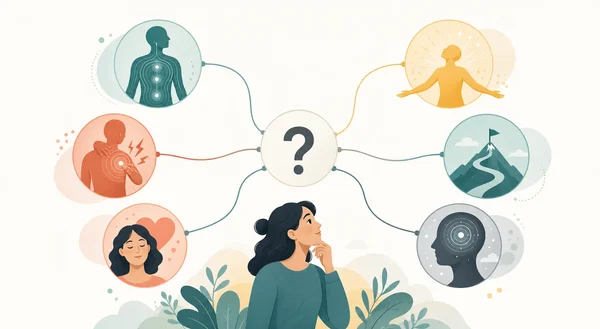
If you are searching for the condition of not feeling medical term, the right answer depends on what kind of "not feeling" you mean. Loss of physical sensation is usually described with terms such as anesthesia, hypoesthesia, or numbness. Loss of pain response is closer to analgesia. Trouble naming or describing emotions points toward alexithymia. Low motivation or emotional flatness may be called apathy, and loss of pleasure is called anhedonia. If your question is about emotion words, an emotion-awareness starting point can help you reflect on patterns without turning a search term into a personal label.
The important idea is simple: "not feeling" is not one medical condition. It is a plain-language phrase that can point to the body, pain, emotion, pleasure, motivation, or awareness of illness. This guide explains the main terms, their word roots, and how to use them carefully.
The Short Answer Depends on the Type of Feeling
If you need the most likely medical terminology answer, start with this matching guide.
| What "not feeling" means | More precise term | What it usually refers to |
|---|---|---|
| No feeling or sensation in a body area | Anesthesia | Loss of sensation, often from anesthetic drugs or nerve-related issues |
| Reduced feeling in a body area | Hypoesthesia or hypesthesia | Decreased sensitivity to touch or other sensory input |
| No pain from a normally painful stimulus | Analgesia | Absence of pain response, not necessarily loss of touch |
| Tingling, prickling, or abnormal sensation | Paresthesia | Abnormal sensation, not a total lack of feeling |
| Difficulty identifying or describing emotions | Alexithymia | Trouble putting feelings into words or separating emotions from body cues |
| Reduced motivation, interest, or emotional response | Apathy | Low drive or emotional responsiveness |
| Reduced pleasure or enjoyment | Anhedonia | Less ability to enjoy things that used to feel rewarding |
| Not recognizing that one has a health problem | Anosognosia | Lack of insight or awareness about a condition |
| Generally not feeling well | Malaise | A vague sense of illness, discomfort, or being unwell |
For a school-style medical terminology question asking "condition of not feeling," the expected answer is often anesthesia because the word can be broken down as "an-" meaning without and "-esthesia" meaning sensation. In real health writing, though, anesthesia is not always the best fit. A numb foot, emotional flatness, and difficulty naming emotions are different experiences.
Condition of Not Feeling Medical Term Root Word and Suffix
The root word and suffix are the reason this search query is confusing. Several medical words use prefixes that mean "not," "without," "reduced," or "lack of," but the root tells you which kind of feeling is involved.
Anesthesia comes from "an-" plus a root related to sensation. In everyday medical use, it often means loss of feeling or awareness caused by an anesthetic. Local anesthesia affects a small area. Regional anesthesia affects a larger region, such as an arm or leg. General anesthesia involves loss of awareness as well as sensation.
Analgesia comes from "an-" plus a pain-related root. It means absence of pain in response to something that would usually hurt. A person under analgesia may still feel pressure, touch, movement, or awareness. That is why analgesia is not the same as anesthesia.
Hypoesthesia uses "hypo-" to mean under or reduced, with the sensation root. It describes reduced sensitivity rather than complete absence. This may be the better term when someone says, "I can feel it, but less than usual."
Alexithymia is built differently. It combines elements often explained as no words for feelings. The modern meaning is not "a person without emotions." It is a pattern of difficulty identifying, processing, or describing emotional states. A person with alexithymic traits may feel stress, anger, sadness, warmth, or care, yet have trouble naming the emotion or explaining it to someone else.
Anosognosia also looks like a "not" word, but it is not about sensation or emotion. It refers to not recognizing an illness, impairment, or health problem. The root is closer to knowledge or awareness than feeling.

When "Not Feeling" Means No Body Sensation
If the question is "What is the medical term for without feeling or sensation?" the closest broad answer is anesthesia. In clinical contexts, the word is often connected with anesthetic medicines that temporarily reduce or remove sensation for a procedure. It can involve a small area, a whole region, or full loss of awareness during general anesthesia.
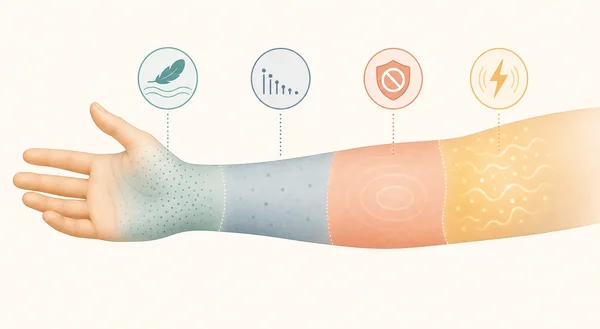
If the issue is reduced sensation outside a procedure, the better everyday medical term may be numbness, with hypoesthesia as a more technical term. For example, someone may describe part of the skin as numb, dull, or less responsive to touch. That is different from paresthesia, which usually means an abnormal sensation such as tingling, burning, prickling, or "pins and needles."
New or sudden sensory changes deserve caution. A sudden one-sided loss of feeling, weakness, trouble speaking, severe headache, confusion, facial drooping, or symptoms after a head injury should be treated as urgent. A web article cannot tell what is causing a sensory change. It can only help you choose clearer language for the conversation.
When "Not Feeling" Means No Pain
Analgesia is the more specific term for not feeling pain from something that would normally be painful. This distinction matters because pain and general sensation are not identical. A person might not feel pain but still feel touch. They might feel pressure during a medical procedure but not sharp pain. They might also have altered pain response because of medication, nerve problems, or other health factors.
The quick memory cue is:
- Anesthesia: loss of sensation or awareness.
- Analgesia: loss of pain response.
- Hypoesthesia: reduced sensation.
- Paresthesia: abnormal sensation.
If you are answering a quiz, the expected term may be one word. If you are describing a real symptom, precision matters more than the quiz answer. Location, timing, triggers, medical history, medication use, and whether the change is sudden all affect what a clinician would want to know.
When "Not Feeling" Means Not Feeling Well
The phrase "condition of not feeling well medical term" usually points to malaise. Malaise is a general sense of feeling unwell, weak, uncomfortable, or out of sorts. It does not name a specific cause.
That vagueness is useful and limited at the same time. It is useful because it gives a word for a real experience when you cannot yet explain it. It is limited because many ordinary and medical situations can cause malaise, including infection, poor sleep, stress, medication side effects, chronic illness, dehydration, or mood-related concerns.
Use malaise when the main idea is "I feel unwell overall." Use numbness or hypoesthesia when the main idea is "I cannot feel sensation normally." Use apathy, anhedonia, or alexithymia only when the main issue is emotional, motivational, or pleasure-related.
When "Not Feeling" Means Emotional Numbness
Emotional numbness is not a single diagnosis. People use it to describe several experiences:
- "I do not feel much of anything."
- "I know something matters, but I cannot access the emotion."
- "I feel detached from myself."
- "I have emotions, but I cannot tell what they are."
- "Nothing feels enjoyable."
Different terms fit different versions of that experience. Alexithymia is most relevant when emotions feel hard to identify, separate from body sensations, or describe in words. It does not mean a person has no inner life. It can mean the signal is hard to read.
Apathy is more about reduced motivation, initiative, interest, or emotional responsiveness. Someone may feel little drive to start tasks, connect socially, or respond to things that used to matter. Anhedonia is more specifically about reduced enjoyment or pleasure. A person may still do activities but receive less reward from them.
These experiences can overlap, and they can appear during stress, burnout, grief, depression, trauma responses, neurodivergence, neurological conditions, substance use, medication effects, or other health situations. The safest wording is descriptive: "I am feeling emotionally numb," "I have trouble naming feelings," or "I am less interested in things I used to enjoy." Those phrases are often more useful than forcing one label too early.

Alexithymia Is Not the Same as Being Emotionless
Many people search "a person without emotions is called" because alexithymia is sometimes nicknamed emotional blindness. That nickname can be misleading. Alexithymia is better understood as difficulty recognizing, differentiating, or describing emotions. It is not proof that someone lacks emotions, empathy, care, or moral feeling.
Someone with alexithymic traits might notice bodily cues before emotional words. They might say, "My chest is tight," "I feel pressure," or "I am tired," while struggling to tell whether the underlying emotion is fear, anger, sadness, shame, or overwhelm. They may also focus on facts, tasks, or outside events rather than inner states.
This is where a structured emotional awareness check can be useful as a reflection aid. A screening-style tool can prompt you to notice patterns in identifying feelings, describing feelings, and focusing on external details. It should not be treated as a clinical conclusion. It is a starting point for self-understanding, journaling, or a conversation with a qualified professional if the pattern is causing distress or relationship problems.
It is also kinder and more accurate not to call a person "without emotions." Better phrases include "has difficulty expressing emotion," "has trouble identifying feelings," "seems emotionally flat," or "may be experiencing emotional numbness." The phrase "flat affect" can describe reduced outward emotional expression, but outward expression still does not tell the whole story of what a person feels inside.
Anosognosia Means Lack of Insight, Not Lack of Feeling
Anosognosia appears in related searches because it includes a "not knowing" idea. But it is not the medical term for not feeling emotion or sensation. It refers to difficulty recognizing that one has a health condition, impairment, or symptom. It can occur with some neurological and mental health conditions.
The distinction matters. Anosognosia is about awareness of a condition. Alexithymia is about identifying and describing emotional states. Anesthesia and hypoesthesia are about physical sensation. Apathy and anhedonia are about motivation and pleasure. These words live near each other in search results because they all involve absence, reduction, or lack, but they do not name the same experience.
If you are helping someone who seems unaware of a serious health issue, avoid arguing over terminology first. Focus on practical safety, trusted professional support, and calm communication. If symptoms are sudden, severe, or linked with confusion, movement problems, risky behavior, or major changes from the person's usual functioning, professional evaluation is important.
A Practical Way to Choose the Right Term
Use this three-question filter before choosing a medical term:
- Is the missing feeling physical, painful, emotional, pleasurable, motivational, or awareness-related?
- Is the feeling completely absent, reduced, abnormal, hard to name, or hard to act on?
- Is this a vocabulary question, a symptom description, or a concern affecting daily life?
For physical sensation, start with numbness, anesthesia, hypoesthesia, or paresthesia. For pain, consider analgesia. For general unwellness, malaise is often the broad term. For emotions, separate alexithymia from emotional numbness, apathy, and anhedonia.
When writing symptoms down, plain language is allowed. You can say, "My left hand has reduced sensation," "I feel pressure but not pain," "I feel emotionally blank," or "I cannot find words for what I feel." These descriptions may be more useful than a single term because they include the experience directly.

Using the Term Without Overstating It
The condition of not feeling medical term is not one fixed label because "feeling" has several meanings. For sensation, anesthesia or hypoesthesia may fit. For pain, analgesia may fit. For feeling unwell, malaise may fit. For difficulty naming emotions, alexithymia may fit. For low motivation or pleasure, apathy or anhedonia may be closer.
If your search is really about emotional awareness, you can reflect on emotional awareness patterns and use the result as a private learning prompt. Bring persistent, distressing, sudden, or life-disrupting changes to a qualified professional, especially when they involve physical numbness, neurological symptoms, self-harm thoughts, severe confusion, or major changes in daily functioning.
FAQ
What is the medical term for the condition of not feeling?
There is no single term for every kind of not feeling. If you mean no physical sensation, anesthesia is often the classic medical terminology answer. If you mean reduced sensation, hypoesthesia may fit. If you mean no pain response, the term is analgesia. If you mean difficulty identifying emotions, alexithymia may be the more relevant word.
What is the medical term for not feeling?
It depends on context. Not feeling sensation can be anesthesia or numbness. Not feeling pain can be analgesia. Not feeling pleasure can be anhedonia. Not feeling motivated or emotionally responsive can be apathy. Not being able to name feelings can be alexithymia.
What is the medical term for without feeling or sensation?
Anesthesia is the most direct broad term for loss of feeling or sensation, especially in medical procedure contexts. Hypoesthesia means reduced sensation rather than full loss. Paresthesia means abnormal sensation, such as tingling or prickling.
What is a lack of feeling called?
A lack of physical feeling is often called numbness, anesthesia, or sensory loss. A lack of pleasure is anhedonia. A lack of motivation or emotional responsiveness is apathy. Difficulty recognizing or describing feelings is alexithymia.
Is alexithymia the word for having no emotions?
No. Alexithymia is not the same as having no emotions. It describes difficulty identifying, processing, or describing emotions. Many people with alexithymic traits do have emotions, but the emotions may feel unclear, bodily, delayed, or hard to express.
What is anosognosia pronunciation and meaning?
Anosognosia is commonly pronounced an-oh-sog-NOH-zee-uh. It means lack of awareness or insight about one's own health condition or impairment. It is not the same as emotional numbness or loss of physical sensation.
What should I say instead of "a person without emotions"?
Use a more precise and respectful phrase. Depending on what you mean, you might say "has difficulty expressing emotion," "has trouble identifying feelings," "seems emotionally flat," "is experiencing emotional numbness," or "shows reduced outward emotional expression." Avoid assuming that a person has no inner feelings.