Improve Emotional Awareness: Start with an Alexithymia Test
Feeling disconnected from your emotions or struggling to put feelings into words? You're not alone. Many individuals with alexithymia traits find it challenging to navigate their inner world. If you've ever wondered, "Why am I so bad at communicating my feelings?", it's a sign that you're ready for self-exploration. This guide offers 7 actionable strategies to help you cultivate emotional awareness and enrich your life. A great first step in this process is understanding your personal starting point with a free alexithymia test, which can provide a valuable baseline for your journey.

This journey isn't about finding a quick fix, but about gently building a new relationship with your emotions. Each step is designed to help you connect the dots between your thoughts, physical sensations, and the feelings that lie beneath. Let's begin exploring these practical methods to enhance your emotional clarity.
Understanding Your Emotional Landscape to Improve Emotional Literacy
The first step toward greater emotional awareness is to become a curious observer of your own experience. Before you can name an emotion, you must first notice its presence. This involves tuning into the subtle signals your body and mind are sending you throughout the day. It's about shifting from autopilot to a more mindful and observant state of being.
Developing this foundational skill, often referred to as interoception, is crucial for anyone looking to improve emotional literacy. It's the practice of noticing internal bodily sensations—a tight chest, a racing heart, a pit in your stomach—and beginning to associate them with emotional states.
The Power of Journaling Your Feelings
One of the most effective and private ways to begin this exploration is through journaling. This isn't about writing perfectly crafted prose; it's about creating a personal log of your inner experience. A dedicated journal becomes a safe space to explore thoughts and sensations without judgment.

Start by setting aside just five minutes a day. Use simple prompts to guide your writing:
- What major events happened today?
- What physical sensations am I noticing in my body right now? (e.g., warmth, tension, emptiness)
- Where in my body do I feel these sensations most strongly?
- What thoughts are running through my mind?
Over time, you may start to see patterns. Perhaps you notice that a tight jaw often accompanies stressful work meetings. This simple act of recording creates a map of your unique emotional landscape, making it easier to navigate over time. To get a more structured view, you can start with our test.
Body Scan Meditation to Connect with Sensations
A body scan is a mindfulness exercise that trains you to pay close attention to physical sensations throughout your body. For individuals with alexithymia traits, this can be a revolutionary practice, as emotions often manifest physically before they are recognized cognitively.
Find a quiet place where you can sit or lie down comfortably. Close your eyes and bring your attention to your breath for a few moments. Then, slowly begin to scan your awareness through your body, starting with your toes. Notice any sensations—tingling, warmth, coolness, pressure, or numbness—without judging them. Move slowly from your feet up through your legs, torso, arms, and head. The goal isn't to change what you feel but simply to notice it. This practice strengthens the mind-body connection, a vital component of emotional awareness.
Building Your Emotional Vocabulary: Key Alexithymia Coping Skills
Once you become better at noticing your internal signals, the next challenge is to find the right words for them. Many people operate with a very limited emotional vocabulary, often defaulting to words like "fine," "bad," or "stressed." Expanding your lexicon is one of the most powerful alexithymia coping skills you can develop. A richer vocabulary allows for more precise understanding and communication.
Using an Emotion Wheel to Expand Your Lexicon
An emotion wheel is a visual tool that organizes feelings into related groups, often with core emotions in the center (like sadness, joy, anger) and more nuanced variations branching outward. For example, "anger" might branch into "irritation," "frustration," and "rage."
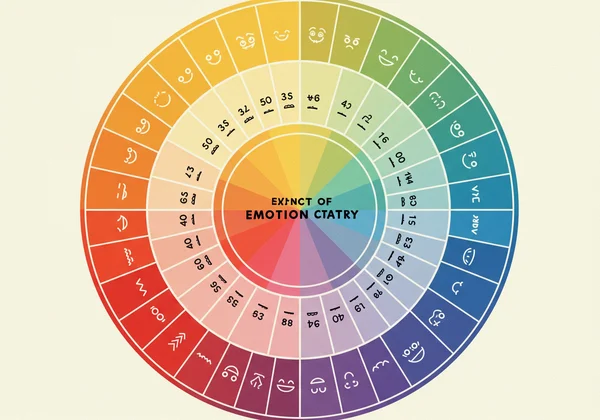
Keep an emotion wheel handy on your phone or printed out. When you notice a sensation through journaling or a body scan, consult the wheel. Does "bad" feel more like "lonely," "bored," or "anxious"? Trying on different words helps you find a better fit. This exercise systematically builds your ability to differentiate and name your feelings, making them feel less overwhelming and more manageable. Many find this tool incredibly helpful after getting their results from an online alexithymia test.
Labeling Emotions: The "Name It to Tame It" Approach
Neuroscience research supports a concept known as "affect labeling," or what Dr. Dan Siegel famously termed the "name it to tame it" approach. The simple act of putting a name to an emotion can help calm the brain's emotional circuitry (the amygdala) and engage its more analytical, problem-solving regions (the prefrontal cortex).
When you feel a strong, unidentified sensation, try to label it silently to yourself: "This is anxiety," or "I am feeling disappointed." This act of naming creates a small but significant space between you and the emotion. It shifts your perspective from being consumed by the feeling to observing it. This is not about dismissing the emotion but acknowledging it with clarity, which is the first step toward deciding how to respond.
Engaging with Emotions Through Active Emotional Awareness Exercises
Observing and labeling are foundational, but true emotional growth comes from actively engaging with your feelings. This means finding healthy ways to process and express what you're experiencing. These active emotional awareness exercises are about creating outlets for your inner world, especially when words are hard to find.
Creative Expression Beyond Words
Emotions don't always need words to be expressed. For many, creative outlets provide a more direct and intuitive channel. This could be anything from painting and drawing to playing a musical instrument, dancing, or even building something with your hands.

Try putting on a piece of music and drawing the shapes and colors that come to mind. You don't need to be an artist. The goal is expression, not perfection. This process can help release pent-up emotional energy and provide surprising insights into what you're feeling. It’s about letting the emotion move through you in a constructive way.
Mindful Observation: Riding the Wave of Feelings
Mindfulness teaches us to observe our emotions like waves in the ocean. They arise, peak, and eventually pass. Instead of fighting a difficult emotion or being swept away by it, we can learn to "ride the wave."
When a strong feeling emerges, find a quiet space and simply allow yourself to feel it. Notice where it is in your body. Observe how its intensity changes over time. Remind yourself that this feeling is temporary. This practice builds emotional resilience and teaches you that you can tolerate discomfort without needing to suppress it or react impulsively. It's a powerful way to explore your emotions.
Seeking Supportive Connection with Others
While much of this work is internal, sharing your experience with a trusted person can be incredibly validating. This could be a close friend, a family member, or a professional therapist. The key is to choose someone who is patient and non-judgmental.
You can practice by using tentative language. For example: "I've been feeling a lot of tension in my chest, and I think it might be anxiety about the upcoming project." This invites conversation and allows you to "test out" your emotional labels in a safe context. Hearing another person reflect your feelings back to you can solidify your understanding and make you feel less alone.
Taking the Next Step: Empowering Your Emotional Journey
Improving emotional awareness is a continuous practice, not a destination. These seven strategies provide a roadmap for your journey inward. By starting with simple observation, building your vocabulary, and finding healthy ways to engage with your feelings, you can cultivate a richer, more connected inner life. Each step you take is a powerful move toward self-understanding and empowerment.
Ready to gain a deeper, personalized understanding of your unique emotional landscape? The journey starts with a single step. Take the free alexithymia test on our homepage to receive an instant score. For even more detailed guidance, you can unlock a unique AI-Personalized Report with actionable insights tailored specifically to you.
Frequently Asked Questions About Improving Emotional Awareness with Alexithymia
How long does it take to improve emotional awareness with alexithymia?
There's no set timeline, as everyone's journey is unique. Consistent practice is key. Some people notice small changes in a few weeks, while for others, it's a more gradual process over months. The goal is progress, not perfection. Be patient and compassionate with yourself.
Is therapy necessary to improve emotional literacy?
While therapy is not strictly necessary for everyone, it can be incredibly beneficial. A therapist specializing in emotional regulation or cognitive-behavioral therapy (CBT) can provide expert guidance, personalized strategies, and a supportive environment. Self-help tools, like the strategies in this article and our online self-assessment, are excellent starting points for self-exploration.
Can people with alexithymia cry or feel intense emotions?
Yes, absolutely. A common misconception is that alexithymia means a complete absence of emotion. More accurately, it's a difficulty with identifying, describing, and processing emotions. Someone with alexithymia traits can feel intense joy, sadness, or anger and may cry or laugh, but they might struggle to connect these physical expressions to the underlying emotion or explain why they are happening.
Why do I freeze up when talking about my feelings?
Freezing up is a common response, especially when you're not used to discussing emotions. It can happen for several reasons: feeling overwhelmed by the intensity of the sensation, not having the words to describe it, or fearing judgment. The "name it to tame it" and journaling techniques can help you practice articulating feelings in a low-pressure way first.
Are there specific alexithymia coping skills for daily situations?
Yes. For example, in a tense conversation, you can use a simple mindfulness technique: pause, take one deep breath, and notice a physical sensation in your body (e.g., your feet on the floor). This can ground you. You can also use a script like, "I need a moment to process how I'm feeling about this." These small actions can make a big difference. Discovering your personal challenges through a tool like our AI personalized report can help you focus on the most effective skills for you.