Interoception and Alexithymia: Why Body Signals Shape Emotional Awareness
Interoception and alexithymia are closely connected because emotions are not only ideas in the mind. They are also patterns of body signals: breath, heartbeat, muscle tension, hunger, temperature, fatigue, pain, pressure, and other internal cues. When those signals feel faint, confusing, delayed, or hard to interpret, a person may know that something is happening inside without being able to name it clearly. If you are trying to understand that pattern in yourself, a structured alexithymia self-check can be a gentle starting point for reflection, while a qualified professional can help when distress, trauma, or daily impairment is significant.

What Interoception Means
Interoception is the brain's ongoing reading of signals from inside the body. It helps you notice whether you are thirsty, full, tense, overheated, sleepy, nauseated, in pain, calm, or activated. Some interoceptive cues are obvious, such as a stomach growl before lunch. Others are subtle, such as a slight tightening in the jaw during conflict or a shallow breathing pattern before a difficult conversation.
Interoception is not the same as introspection. Introspection is thinking about your thoughts, motives, or memories. Interoception is noticing internal body sensations before, during, or after those thoughts. The two can work together. For example, you might reflect, "I keep avoiding this email," and then notice, "My chest gets tight whenever I open it." That body cue may become part of the emotional picture.
Poor interoception does not always mean a person notices nothing. Some people miss signals until they become intense. Some notice many signals but cannot sort them. Some become overwhelmed by body sensations and shift attention away from them. Others recognize physical states, such as hunger or tiredness, more easily than emotional states. The important point is that interoception is multidimensional: noticing, tolerating, interpreting, and using body cues are related skills, but they are not identical.
What Alexithymia Adds to the Picture
Alexithymia describes a pattern of difficulty identifying feelings, describing feelings, and sometimes relying more on external facts than inner emotional detail. A person with alexithymic traits may feel emotion strongly, but the emotion may arrive as "pressure," "shutdown," "blankness," "irritation," or "something is wrong" instead of a clear label like sadness, fear, relief, or embarrassment.
This matters because alexithymia is often misunderstood as indifference. In everyday life, a person may care deeply but need more time to understand what is happening inside. They may answer "I don't know" when asked how they feel, not because they are hiding something, but because the internal signal has not yet become a usable emotional message.
Alexithymia can appear in many groups. It is commonly discussed in relation to autism and ADHD, and it can also show up around anxiety, depression, PTSD, chronic stress, medical conditions, or ordinary life histories that taught someone to ignore their body. You can have alexithymia without autism. Autism and alexithymia can overlap, but they are not the same thing.
How Body Signals Become Emotion Words
Emotion words become easier to use when they are linked to personal body patterns. One person may experience anxiety as chest tightness and fast speech. Another may feel it as nausea and restless legs. A third may not notice obvious body changes until the anxiety has already shaped behavior, such as snapping, freezing, or leaving the room.
Interoception and emotions therefore work like a translation system. The body sends cues. The brain compares those cues with context, memory, expectations, and learned emotion language. Then a label becomes possible. If the cues are unclear, or if the person has learned to distrust them, the translation may be slow or incomplete.
This is why generic emotion charts can help some people but frustrate others. A chart may offer useful vocabulary, but it cannot tell you exactly how your body experiences "angry," "lonely," "ashamed," or "safe." The more useful question is not "What should this emotion feel like?" It is "What tends to happen in my body when this situation, need, or reaction appears?"

Signs of Poor Interoception in Daily Life
Symptoms of poor interoception can be practical, emotional, or social. A person may forget to eat until they feel shaky, miss the need for a bathroom break, stay too hot or cold without adjusting clothing, notice pain late, or struggle to tell whether they are tired, bored, anxious, overstimulated, or hungry.
Emotionally, impaired interoception can look like sudden mood changes that seem to come from nowhere. The build-up was real, but the early signals were missed. Someone may describe feeling "fine" for hours, then suddenly feel overwhelmed. Others may sense body discomfort but misread it. Hunger may feel like anger. Fatigue may feel like sadness. Overstimulation may feel like rejection or panic. None of these patterns are personal failures; they are clues that the body-to-emotion pathway may need more attention.
Socially, interoceptive issues can affect communication. When someone cannot quickly identify feelings, relationship conversations may stall. They may need pauses, written reflection, or a low-pressure way to answer later. For supporters, patience is often more useful than repeated emotional interrogation. Asking "What do you notice in your body right now?" may be easier than asking "What are you feeling?" but even that question should be offered gently.
Interoception, Autism, and PTSD
The relationship is not simple. Research and lived experience both suggest that alexithymia can overlap with autism, but emotional awareness differences should not automatically be attributed to autism alone. Looking specifically at alexithymic traits and interoceptive cues can make the picture more precise and more respectful.
Interoception and PTSD also overlap in important ways. Trauma can affect how safe it feels to notice the body. Some people become highly alert to internal sensations, especially those linked to threat, pain, or panic. Others disconnect from body cues because that helped them get through overwhelming experiences. In either direction, trauma-informed support matters. Slow pacing, choice, grounding, and professional guidance may be important, especially if body-focused exercises increase distress.
Gentle Ways to Improve Interoceptive Awareness
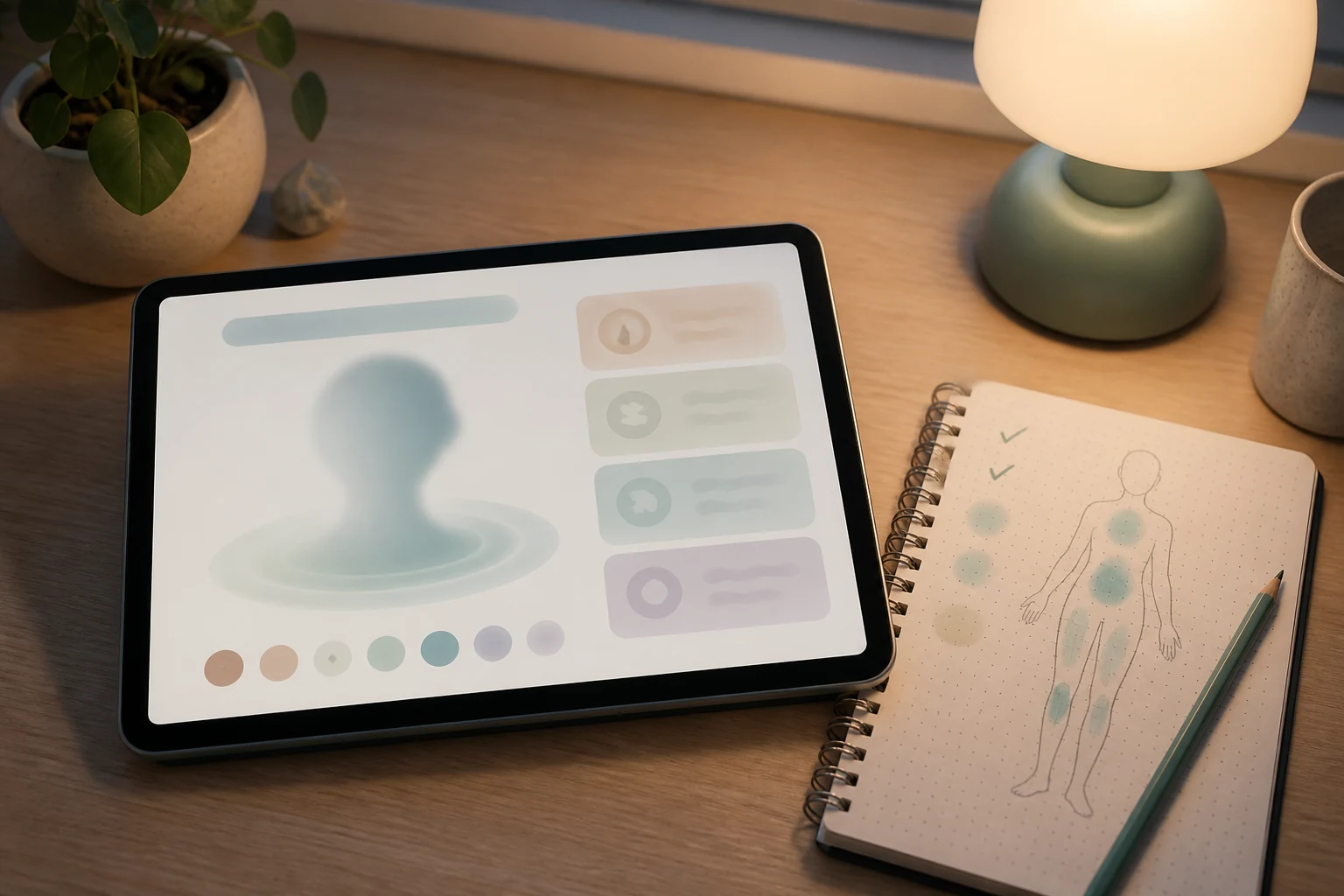
Improving interoception is usually less about forcing deep emotional insight and more about building a clearer, kinder signal map over time. Start with neutral or practical sensations before intense emotions. Notice temperature, thirst, posture, breathing, muscle tension, fullness, or tiredness. These cues can be easier to observe without pressure.
Try a simple three-column note:
| Situation | Body cues | Possible meaning |
|---|---|---|
| Before a meeting | Tight jaw, shallow breath | Nervous, rushed, or underprepared |
| After skipping lunch | Shaky hands, irritability | Hunger or low energy |
| During conflict | Hot face, quiet voice | Anger, fear, shame, or overload |
The goal is not to get the "right" answer every time. The goal is to build a pattern library. Over weeks, you may notice that certain cues often appear with certain needs: food, rest, space, reassurance, movement, quiet, or support.
Interoceptive awareness exercises can include pausing before meals, checking breathing after climbing stairs, noticing hands after washing them, scanning shoulders before and after stretching, or rating energy on a 1 to 5 scale. For some people, an interoception workbook or occupational therapy support can make this more structured. For others, a therapist may help connect body cues with emotion words in a safe, paced way.
If you are exploring alexithymia symptoms, an emotional awareness screening tool may help organize your observations. It should be used as a reflection aid, not as a substitute for care, especially if you are dealing with trauma symptoms, self-harm thoughts, severe anxiety, or major changes in functioning.

A Practical Reflection Path for Alexithymia
Interoception and alexithymia are easiest to explore when the process is concrete. Instead of asking yourself to identify a full emotion immediately, move through smaller questions:
- What is the strongest body sensation I notice?
- Where is it located?
- Is it pleasant, unpleasant, neutral, or hard to tell?
- Did it appear before, during, or after a specific situation?
- What basic need might be present: rest, food, movement, safety, connection, quiet, or information?
- Which emotion words might fit, even if I am not certain?
This path keeps uncertainty normal. Many people with alexithymia benefit from permission to say, "I am not sure yet." Naming an emotion can be useful, but so can naming a state: tense, activated, drained, disconnected, heavy, restless, foggy, or settled.
Supporters can use the same approach. Give time, reduce pressure, and offer choices. "Do you want quiet, food, a walk, or time to write?" may be more helpful than demanding a complete emotional explanation. If the person wants to talk later, treat that as communication, not avoidance.
When to Seek More Support
Self-reflection can be useful, but it has limits. Consider professional support if emotional confusion is affecting relationships, work, school, sleep, eating, safety, trauma recovery, or daily decisions. A clinician, therapist, occupational therapist, or other qualified professional may help separate alexithymic traits from anxiety, depression, PTSD, neurodivergent sensory patterns, medical concerns, medication effects, or stress.
Using Alexithymia Testing as a Starting Point
The link between interoception and alexithymia is hopeful because it gives you something specific to observe. If feelings are hard to name, you do not have to begin with a perfect emotion label. You can begin with the body: breath, stomach, muscles, temperature, energy, and timing.
A free alexithymia self-assessment can support that process by giving structure to questions about identifying and describing feelings. It cannot replace a professional evaluation, and it cannot explain every cause of emotional difficulty. But it can help you notice patterns, find language for your experience, and prepare clearer questions for further support.
Interoception and alexithymia are not signs that a person has no emotions. They are reminders that emotional awareness is built from signals, context, language, safety, and practice. With patience and the right support, many people can become more fluent in their own internal cues.
FAQ
What are the symptoms of poor interoception?
Poor interoception may show up as missing hunger, thirst, pain, bathroom needs, temperature changes, fatigue, or physical signs of stress until they become strong. Emotionally, it may look like feeling blank, suddenly overwhelmed, or unable to tell whether a body state means anxiety, anger, sadness, excitement, hunger, or exhaustion.
Can you have alexithymia without autism?
Yes. Alexithymia and autism can overlap, but they are separate concepts. Alexithymic traits can also appear with trauma histories, anxiety, depression, ADHD, chronic stress, medical conditions, or no single obvious cause. A professional can help interpret the wider picture if the pattern is causing concern.
What kind of trauma causes alexithymia?
There is no single trauma type that always leads to alexithymia. Some people develop emotional naming difficulties after chronic stress, neglect, unsafe relationships, overwhelming events, or environments where emotions were ignored or punished. Trauma can also change whether body sensations feel safe to notice, which is why trauma-informed pacing matters.
What personalities is alexithymia common in?
Alexithymia is better understood as an emotional awareness pattern than a personality type. It may be more visible in people who rely on facts, routines, problem-solving, or external details when emotions are unclear. That does not mean they lack care or depth. It means inner experience may be harder to identify and describe.
How do interoception exercises help alexithymia?
Interoception exercises can help by making body cues more noticeable and easier to connect with context. Simple practices such as checking breathing, tension, hunger, temperature, or energy can build a personal map of internal signals. Over time, that map may make emotion words less abstract.
Is interoception treatment something I can do at home?
Some gentle interoception activities can be practiced at home, especially neutral body checks and daily pattern notes. However, if body awareness brings up panic, trauma memories, self-harm thoughts, or intense distress, it is safer to work with a qualified professional. At-home practice should feel paced, optional, and supportive.