Showing No Emotion: Meaning, Words, and What It Can Signal
Showing no emotion can look simple from the outside: a blank face, a flat voice, no tears, no visible enthusiasm, or little reaction when others expect one. The meaning is rarely simple, though. Some people are calm by temperament, some are trying to stay composed, and some may struggle to identify or describe what they feel inside. If this question connects to your own emotional awareness, an emotional self-reflection starting point can help you organize what you notice without turning it into a label. This guide explains the common words, psychology meanings, relationship patterns, and gentle next steps behind showing no emotion.

What Does Showing No Emotion Mean?
In everyday language, showing no emotion means a person does not visibly display feelings in a situation where others might expect facial expression, tone, gestures, tears, laughter, anger, or excitement. It describes what can be observed, not necessarily what is happening internally.
That distinction matters. A person may show no emotion while feeling a great deal inside. Another person may feel muted, confused, numb, or detached. Someone else may be concentrating, tired, socially anxious, culturally trained to stay controlled, or unsure how to respond. The same outside behavior can have very different causes.
People also use this phrase in a few different contexts:
- A facial expression, such as a blank stare or neutral face.
- A communication style, such as a flat voice or brief replies.
- A relationship concern, such as "my partner shows no emotion when I cry."
- A word search, such as "showing no emotion synonym" or a crossword clue.
- A self-question, such as "why do I show no emotion?"
The safest starting point is curiosity: what is the pattern, when does it happen, and does the person also have trouble naming, describing, or responding to feelings?
Words for Showing No Emotion
If you are looking for a word for showing no emotion, several choices can fit, but they do not mean exactly the same thing.
Impassive means not visibly reacting or not showing feeling. It is often one of the most precise neutral words for a face, expression, or response that gives little away.
Expressionless focuses on the face. Someone can have an expressionless look without being emotionally empty.
Stoic usually suggests endurance, restraint, or calm under difficulty. It can be admiring, neutral, or critical depending on context.
Unemotional means not showing much emotion, but it can sound judgmental if used about a person rather than a moment.
Emotionless is stronger. It can imply no feeling at all, so use it carefully unless you are describing an appearance rather than making a claim about the person's inner life.
Apathetic means lacking interest or concern. It is not the same as showing no emotion, because a person may look calm while still caring deeply.
Detached suggests distance from feelings, people, or the situation. It may describe a coping style, a temporary state, or a relationship pattern.
Deadpan means deliberately expressionless, often in humor.
For crossword-style searches, common answers can include terms like "stoic," "stolid," "wooden," "impassive," "unmoved," or "deadpan," depending on the number of letters. For real people, however, word choice should stay gentle. "Impassive" or "expressionless" usually describes behavior more fairly than "cold" or "heartless."
A Person Without Emotions Is Called What?
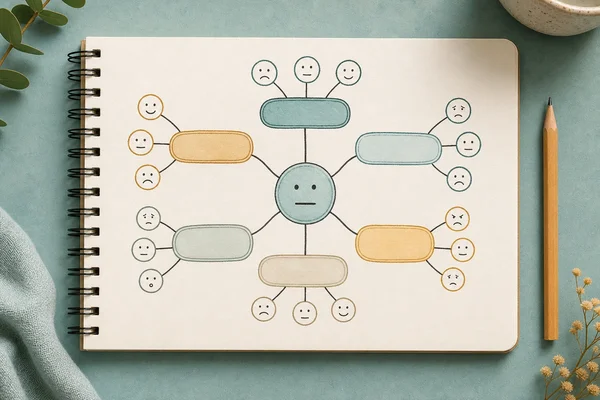
Searches like "a person without emotions is called" often mix everyday wording with psychology wording. In casual speech, people may say emotionless, cold, robotic, blank, stoic, or impassive. Those words describe an impression. They are not careful psychological explanations.
In psychology, it is uncommon to assume that a person has no emotions at all. More often, the useful question is whether the person has difficulty recognizing, naming, expressing, regulating, or communicating emotions. One relevant concept is alexithymia, which refers to difficulty identifying and describing feelings. Alexithymia does not mean a person has no inner emotional life. It means the bridge between body sensations, emotion words, and communication may be harder to use.
That is why a person who appears to show no emotion may still feel stress in the body, care about others, or react internally without showing it clearly. If you are exploring whether emotional expression and emotional awareness are connected for you, a TAS-20 style emotional awareness resource can give structure to that reflection while keeping the result informational.
Psychology Reasons Someone May Show No Emotion
Showing no emotion can come from many overlapping sources. None of these possibilities should be treated as proof by themselves, but they can help you think more clearly about what might be going on.
Emotional awareness may be unclear
Some people do not easily know what they feel. They may notice a tight chest, headache, fatigue, restlessness, or stomach tension before they can name sadness, anger, fear, excitement, or disappointment. When the feeling is hard to identify, the face and voice may also look flat.
This can be relevant to alexithymia, especially when the person often says things like "I do not know what I feel," "I am fine," or "I cannot explain it" even during emotionally loaded moments.
Expression may be learned or controlled
Some families, workplaces, sports cultures, and social settings reward emotional control. A person may have learned that showing sadness, enthusiasm, fear, or affection is unsafe, embarrassing, weak, or inconvenient. Over time, restraint can become automatic.
This is different from not feeling. It is more like having a strong filter between inner experience and outward display.
Stress can narrow visible reactions
When someone is overwhelmed, they may freeze, go quiet, speak in short sentences, or appear blank. The nervous system may be focused on getting through the moment rather than expressing feeling. After the stress passes, the emotion may become clearer.
Low mood, burnout, or numbness can mute expression
Emotional numbness, exhaustion, grief, burnout, depression symptoms, or trauma-related shutdown can make reactions feel distant or hard to access. If showing no emotion comes with loss of interest, isolation, sleep changes, hopelessness, self-harm thoughts, or major daily disruption, professional support is important.
Communication style may differ
Some people communicate care through actions instead of facial expression or words. Some autistic or neurodivergent people may express emotion in ways others do not expect. Some people are simply less demonstrative. The key is not whether the display looks typical, but whether the person can understand needs, communicate respectfully, and function in relationships.
Showing No Emotion in Relationships and Family
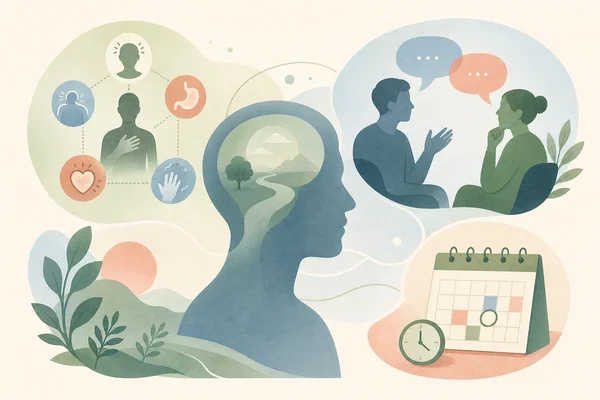
When a wife, husband, boyfriend, girlfriend, child, teenager, or friend shows no emotion, the impact can feel personal. You might wonder, "Do they care?" "Are they angry?" "Are they avoiding me?" "Why do they show no emotion when I am upset?"
Those questions are understandable. Still, the most helpful response is usually to separate observation from interpretation.
Observation sounds like: "When I cried, you looked away and stayed quiet." Interpretation sounds like: "You do not care about me." The interpretation may feel true in the moment, but it can close the conversation before you learn what was happening.
Try questions that invite clarity without accusation:
- "What was going on for you when that happened?"
- "Did you feel blank, overwhelmed, unsure what to say, or something else?"
- "Would it help to have time before we talk?"
- "When you care about someone, how do you usually show it?"
- "What kind of response would feel manageable for you?"
If you are the person who shows little emotion, you can also name the pattern without overexplaining it: "I may look blank, but I am listening." Or: "I need a few minutes to figure out what I feel." Small statements like these can reduce confusion for both sides.
For parents, a child or teenager showing no emotion when disciplined does not automatically mean defiance or lack of empathy. It may reflect shutdown, embarrassment, fear, confusion, sensory overload, or a limited emotion vocabulary. Calm follow-up after the moment often works better than demanding an immediate display of remorse.

A Quick Reflection Checklist
Use this checklist to understand the pattern before deciding what it means. It works for self-reflection and for thinking about someone close to you.
-
Situation: When does showing no emotion happen most often: conflict, praise, grief, affection, stress, discipline, public settings, or private conversations?
-
Body clues: Are there body sensations, such as tightness, heat, heaviness, stomach discomfort, racing heart, or fatigue?
-
Emotion words: Is it hard to choose words like sad, angry, ashamed, afraid, disappointed, relieved, proud, or excited?
-
Timing: Does the feeling show up later, after the conversation ends?
-
Expression gap: Does the person feel something internally but struggle to show it outwardly?
-
Relationship effect: Are others hurt, confused, or left guessing because the emotion is not visible or named?
-
Functioning: Is the pattern causing problems at home, school, work, or in mental health?
You can also try a simple two-column note: "What happened" and "What I noticed in my body." Then add a third column later: "Possible feeling words." This keeps the task concrete and avoids forcing a perfect answer.

When Showing No Emotion Deserves More Support
Showing no emotion is not automatically a problem. It may be a personality style, a learned habit, a moment of composure, or a mismatch between inner feeling and outward display. It deserves more attention when it causes distress, damages relationships, blocks communication, or appears with numbness, shutdown, hopelessness, intense stress, or thoughts of self-harm.
If the pattern is mainly about difficulty knowing or explaining feelings, it may help to build emotional vocabulary slowly. Start with broad categories like pleasant, unpleasant, tense, heavy, calm, or overwhelmed. Then move toward more specific words. If you want a structured way to reflect on alexithymia-related patterns, the private emotional awareness test can be a low-pressure place to gather observations before talking with a qualified professional.
For someone you care about, support works best when it is specific and respectful. Instead of demanding emotion, ask for signals you can both understand: a sentence, a pause, a text after the conversation, or one clear word for the current state. The goal is not to force a dramatic display. It is to make inner experience easier to notice, name, and communicate.
FAQ
What is the word for showing no emotion?
Common words include impassive, expressionless, stoic, unemotional, detached, stolid, unmoved, and deadpan. "Impassive" is often a good neutral choice because it describes little visible reaction without claiming the person feels nothing.
What is a person called when they show no emotion?
In casual language, someone might be called stoic, impassive, expressionless, or unemotional. In psychology, it is better to describe the specific pattern, such as difficulty expressing feelings or difficulty identifying emotions, rather than labeling the whole person.
What is a lack of emotion called?
People may use terms like emotional numbness, flat affect, apathy, or alexithymia, but these are not interchangeable. Emotional numbness describes muted feeling. Apathy involves reduced interest or motivation. Alexithymia involves difficulty identifying or describing feelings. Flat affect describes reduced visible expression and is usually discussed in clinical contexts.
Does showing no emotion mean alexithymia?
Not necessarily. Alexithymia is about difficulty identifying and describing feelings, not simply having a neutral face. Someone can show little emotion because of personality, culture, stress, fatigue, relationship conflict, or self-control. The alexithymia question becomes more relevant when the person often cannot name what they feel or explain emotional states.
Can someone show no emotion but still care?
Yes. Care does not always appear as a dramatic facial expression or emotional speech. Some people show care through problem-solving, loyalty, practical help, consistency, or quiet presence. The challenge is that others may not recognize those signals unless they are explained.
Is showing no emotion a sign of autism?
It can be part of how some autistic people are perceived, but it is not enough to identify autism. Facial expression, tone, sensory load, social expectations, and communication style can all differ from person to person. If autism is a concern, it is better to look at the broader lifelong pattern with an appropriate professional.
How can I show no emotion in a stressful moment without shutting down?
Aim for calm regulation rather than total suppression. Slow your breathing, relax your jaw and shoulders, keep your voice steady, and give yourself a short phrase such as "I need a moment." After the stressful moment, check in with what you felt. Long-term emotional health usually benefits from noticing feelings, not pushing them away forever.