Why Don't I Know How I Feel?
If you have ever searched "why don't I know how I feel," you may already know the frustration of having an inner experience without a clear emotional name. Something is happening in your body, your thoughts are busy, or your mood changes around other people, yet the label stays blank. That does not mean you are broken or emotionless. It often means your emotional signals are hard to notice, hard to sort, or hard to describe in language. A structured resource such as a free emotional awareness screening can offer a calm starting point for reflection, especially when you want vocabulary before you try to explain things to someone else.
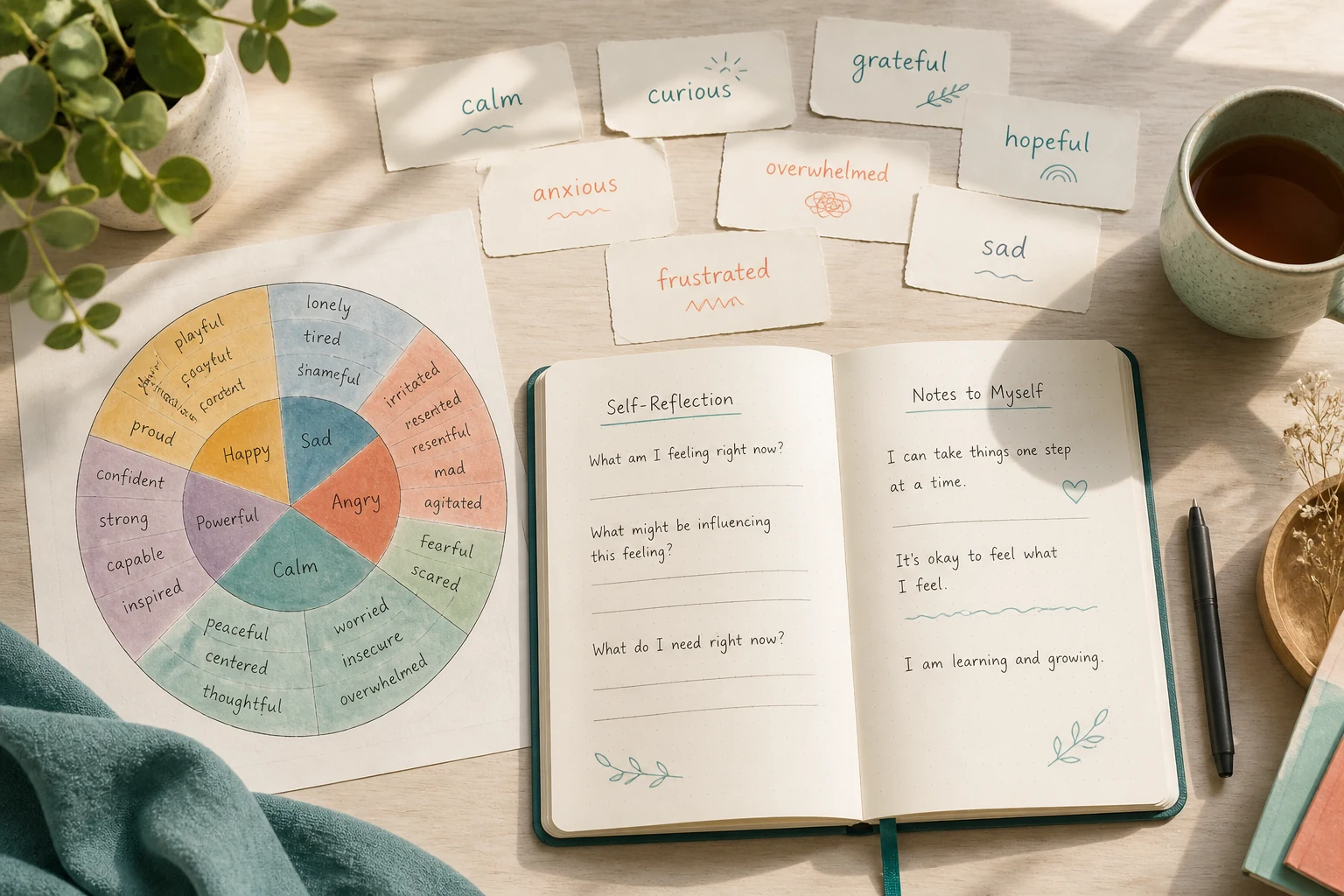
What It Means When Feelings Do Not Have Clear Names
Not knowing how you feel usually points to a gap between experience and interpretation. Your nervous system may still be reacting: your chest tightens, your stomach drops, you avoid a conversation, or you suddenly feel tired. The difficulty is turning those signals into a sentence such as "I feel disappointed," "I feel pressured," or "I feel lonely."
This can happen for ordinary reasons. You may be overwhelmed, sleep deprived, distracted, stressed, or trying to process several feelings at once. It can also appear during periods of emotional numbness, grief, burnout, depression, anxiety, trauma responses, or dissociation. For some people, the pattern is long-standing and may relate to alexithymia, a term used for difficulty identifying and describing emotions.
The key point is that "I do not know" is information. It tells you the next step is not forcing a perfect answer. The next step is slowing the question down until your mind has more clues to work with.
Why Do I Not Know How I Feel?
There is rarely one single reason. Most people who wonder "why do I not know how I feel" are dealing with a combination of habits, body signals, past learning, and current stress.
One common cause is emotional overload. When many feelings arrive at once, the mind may produce a vague label like "bad," "weird," or "off" because that is easier than separating anger from fear, sadness from shame, or tiredness from disappointment.
Another cause is limited emotional vocabulary. If you grew up in an environment where feelings were dismissed, mocked, or treated as inconvenient, you may have learned to move quickly into thinking, explaining, fixing, or staying quiet. The emotion still exists, but the words were never practiced enough to become easy.
Body disconnection can also play a role. Some people notice thoughts before sensations. Others notice sensations but do not know what they mean. A tight jaw, shallow breathing, restless hands, or heaviness behind the eyes may be emotional information, but it may not immediately translate into a named feeling.
Alexithymia is another possibility to understand, not a label to pin on yourself too quickly. It is commonly described through patterns such as difficulty identifying feelings, difficulty describing feelings, and a tendency to focus more on external facts than inner states. If that sounds familiar, a TAS-20 style alexithymia self-assessment can help you organize the pattern for self-reflection.
Alexithymia, Emotional Numbness, and Low Empathy Are Not the Same Thing
People often worry that not knowing their feelings means they lack empathy or are becoming emotionally cold. That fear is understandable, but the ideas are different.
Alexithymia is about emotional awareness and description. A person may care deeply and still struggle to identify what they feel in the moment. They may recognize that someone else is hurt, want to respond well, and still freeze because their own internal map is unclear.
Emotional numbness is often described as feeling flat, muted, distant, or disconnected. It can be temporary and may appear with stress, depression, anxiety, trauma, dissociation, medication effects, or exhaustion. Numbness is more about reduced access to emotional intensity, while alexithymia is more about difficulty recognizing or naming emotions.
Low empathy is different again. Empathy involves noticing and responding to another person's experience. Someone can have trouble naming their own feelings while still being considerate, loyal, and responsive. The question "Is a lack of empathy a red flag?" depends on behavior, context, and impact. Repeated cruelty, disregard, or manipulation is concerning. Confusion, shutdown, or limited emotional language calls for curiosity and support.
A Simple Way to Start Identifying What You Are Feeling
When the answer is blank, try working from concrete clues instead of demanding an emotional label first.
Start with the body. Ask: Where do I feel something? Is it tight, heavy, hot, restless, numb, sharp, or slow? Then look at the situation. What happened before this feeling became noticeable? Did someone expect something from me? Did I lose something, avoid something, or feel misunderstood?
Next, try a broad category rather than a precise word. You might ask whether the feeling is closer to sadness, anger, fear, shame, guilt, loneliness, relief, excitement, or disgust. If even that feels too exact, use a scale: pleasant or unpleasant, high energy or low energy, moving toward someone or pulling away.
Then test one sentence:
- "Part of me might feel..."
- "My body is acting as if..."
- "If a friend described this, I might wonder if they felt..."
- "The emotion may be unclear, but the need might be..."
You do not have to be right on the first try. Emotional literacy grows through rough drafts. A guessed label can be useful if it helps you notice, revise, and understand your response.
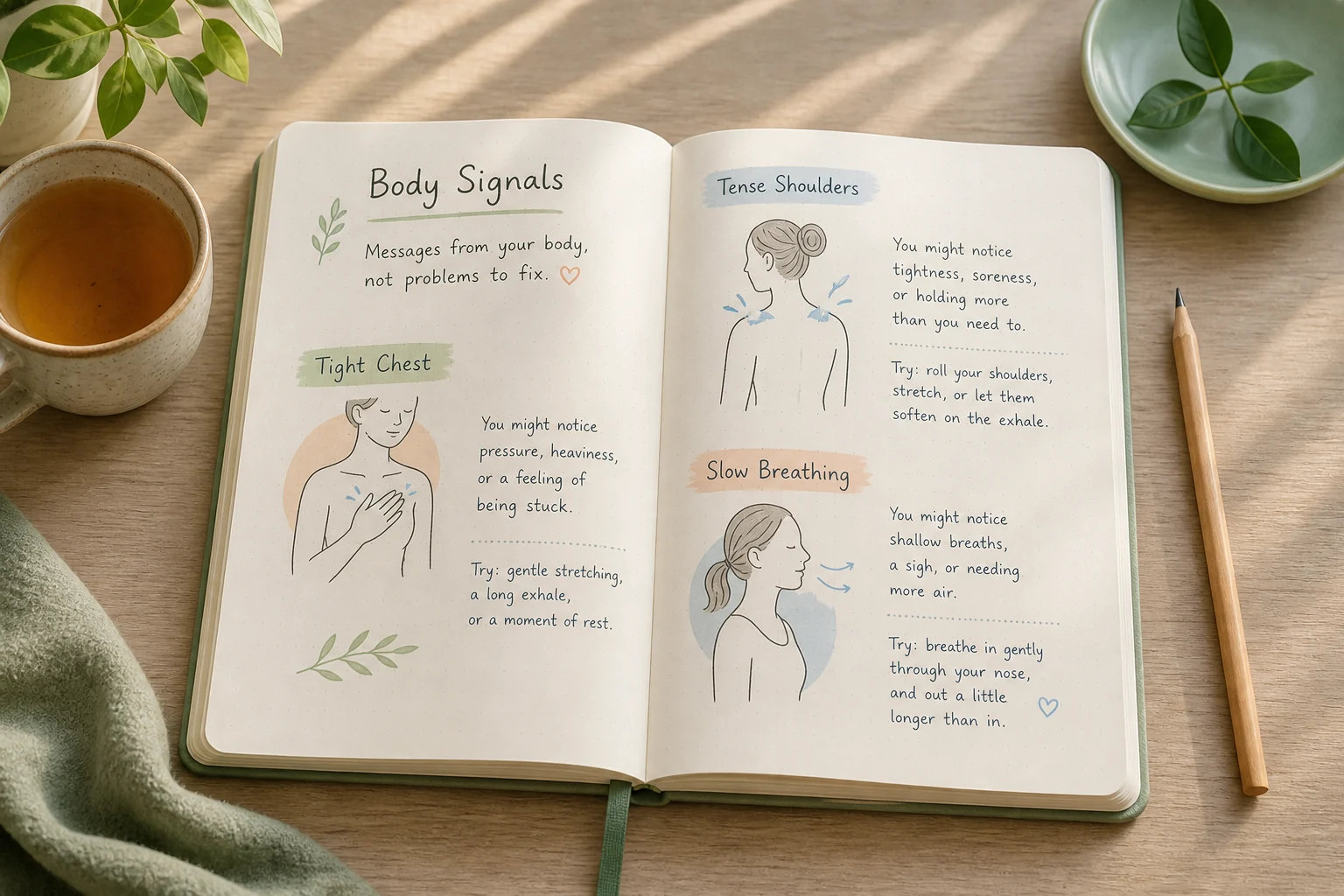
Why You Might Know the Thought but Not the Feeling
Some people can explain a situation in detail but still cannot answer the emotional question. They can say what happened, what should happen next, and why someone acted a certain way. But when asked "How did that make you feel?" they go blank.
This often happens when thinking has become the default coping strategy. Thinking is useful. It helps you solve problems, avoid impulsive reactions, and stay organized. But emotional awareness needs a different kind of attention. It asks you to notice signals that may be subtle, mixed, or uncomfortable before they turn into a neat explanation.
Try separating thoughts from feelings on paper. A thought might be "They are disappointed in me." A feeling might be anxiety, embarrassment, resentment, sadness, or pressure. The same thought can carry different feelings depending on the person and moment.
It also helps to look for action urges. Wanting to withdraw may point toward shame, overwhelm, fear, or exhaustion. Wanting to argue may point toward anger, hurt, or feeling cornered. Wanting reassurance may point toward uncertainty or vulnerability. The urge is not the whole feeling, but it is a clue.
When "I Don't Know What I'm Feeling" Needs More Support
It is normal to feel emotionally unclear sometimes. It becomes more important to seek support when the confusion is persistent, distressing, or affecting daily life, relationships, work, school, sleep, appetite, safety, or your ability to care for yourself.
Consider talking with a qualified mental health professional if you feel numb for long stretches, feel disconnected from yourself or reality, have intense mood changes, struggle after trauma, or feel unable to function in your usual routines. Professional support can help you explore possible contributors and build skills without turning one search phrase into a fixed identity.
If you are supporting someone else, try not to demand instant emotional clarity. Questions like "What do you need right now?" or "Would it help to talk, pause, or write it down?" may be easier than "What are you feeling?" Some people need time before a feeling becomes nameable.
A Gentle Next Step When Feelings Stay Unclear
If the phrase "why don't I know how I feel" keeps returning, treat it as an invitation to observe patterns rather than judge yourself. For one week, note three things once a day: body sensation, situation, and possible feeling. Keep the entries short. Over time, patterns may appear: certain people, tasks, conflicts, or transitions may repeatedly create the same unclear state.
You can also use a gentle alexithymia reflection tool to compare your experience with common emotional-awareness patterns. The result should be used as a self-awareness prompt, not a clinical conclusion. If the result raises concerns or your emotional confusion feels intense, bring your notes to a therapist, counselor, doctor, or another qualified professional who can help you interpret the bigger picture.

FAQ
What does it mean if you do not know how you feel?
It usually means your emotional signals are unclear, mixed, muted, or difficult to translate into words. You may still be having emotions, but you may need more time, body awareness, or vocabulary to recognize them. If the pattern is long-standing, alexithymia may be one concept worth learning about.
Is it normal to not know how to feel?
Yes, it can be normal in stressful, unfamiliar, overwhelming, or emotionally complicated situations. Many people need time before they can name a feeling accurately. It deserves extra attention when it happens often, causes distress, or interferes with daily life and relationships.
Why don't I feel like a normal person?
Feeling different from other people does not mean you are abnormal. Some people process emotions more slowly, more physically, or more privately. Stress, burnout, neurodivergence, trauma history, depression, anxiety, and alexithymia-related traits can all affect emotional clarity. A professional can help if the feeling is persistent or painful.
Can alexithymia make it hard to tell people how I feel?
It can. If you have trouble identifying or describing feelings internally, sharing them with another person may feel even harder. Helpful supports include emotion word lists, body-sensation notes, sentence starters, and giving yourself time before important conversations.
Is not knowing how I feel the same as lacking empathy?
No. Difficulty naming your own emotions is not the same as not caring about other people. Empathy is shown through attention, respect, and behavior. Some people with limited emotional vocabulary still care deeply and work hard to respond thoughtfully.